
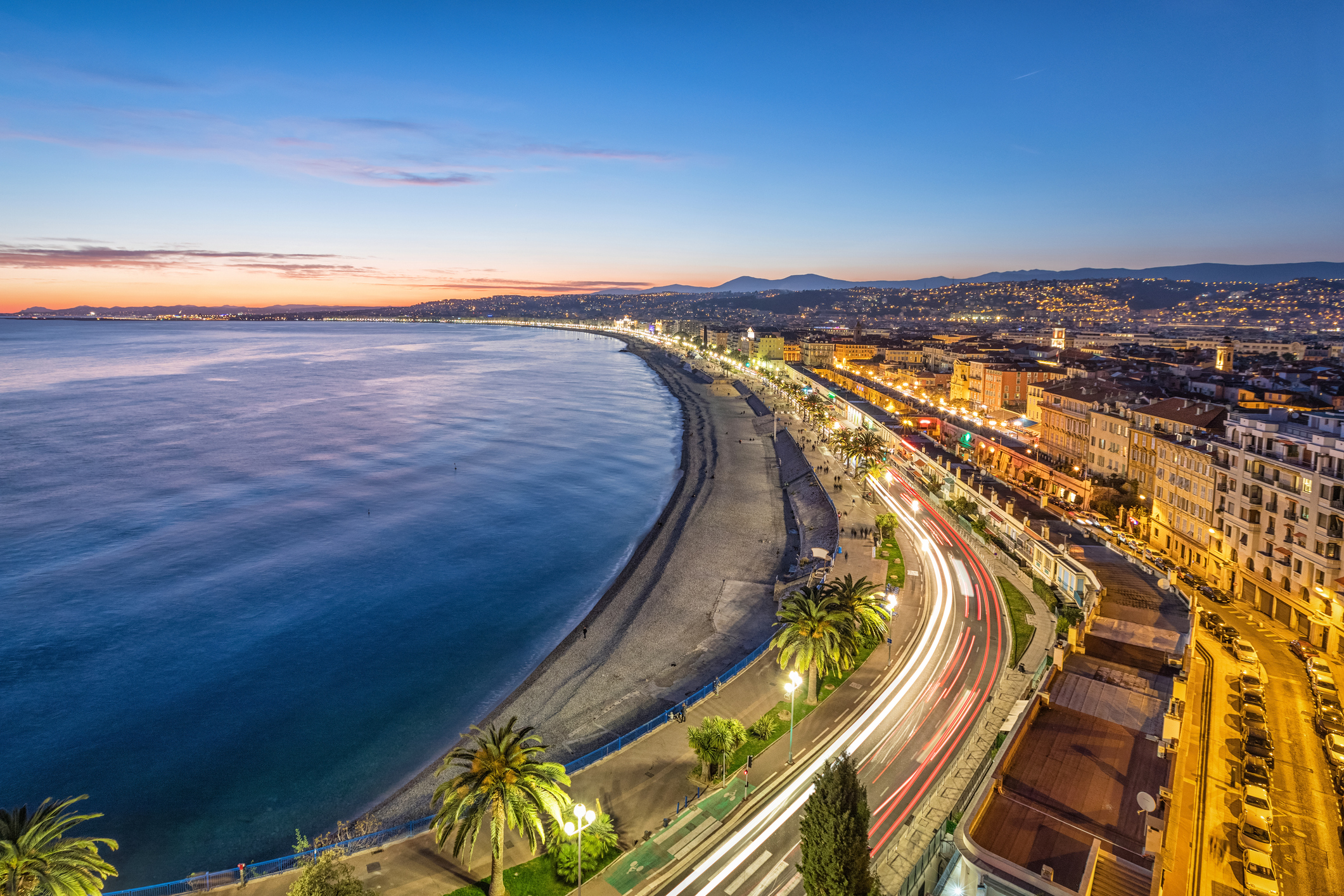
Er du på ferie i Nice og ønsker å se deg litt om, kan leiebil være et flott alternativ. Det finnes flere bilutleiefirmaer å velge fra, og du kan forhåndsbestille hjemmefra via telefon eller nett – eller velge et firma på flyplassen. Alt etter egne ønsker og behov. Nice utgjør den femte største byen etter befolkning i Frankrike, de andre er Paris, Marseille, Lyon og Toulouse. Hotellkapasiteten er en av de største i Frankrike og fem millioner turister besøker Nice hvert år.
Nice Côte d’Azur Airport – bilutleie
Fra flyplassen Nice Côte d’Azur Airport kan du leie fra hele ni forskjellige bilutleiefirmaer. Fra de store bilutleie kjedene som Avis, Hertz og Europcar, til de litt mindre kjente som Firefly, Sixt og Budget. Her kan du allerede booke en bil før du reiser og plukke den opp når du har landet på Nice Côte d’Azur Airport. Eller du kan ta kontakt på selve flyplassen og leie en bil. Du kan velge ut fra følgende kriterier, automatgir, 7-9 seter, aircondition, på flyplassen eller ubegrenset kjørelengde.
 Det finnes også mange utleiefirmaer på nett. Både Hertz og Avis har egne nettsider. Vil du heller gå for pris kan det være greit med et par nettsider som sammenligner priser og dine behov, slik at du får det beste tilbudene til enhver tid. En av disse nettsidene er «rentalcars». De garanterer lave priser og ingen kredittkortavgifter. Siden er enkel å søke i og de har en egen app til mobilen hvis dette er ønskelig. De har også fått gode tilbakemeldinger via Trustpilot.
- Den femte største byen i Frankrike
- Rundt fem millioner turister eller besøkende hvert år
- Fra flyplassen Nice Côte d’Azur Airport kan du leie bil fra flere store bilutleiefirmaer
Rundtur i Provence
Det anbefales av flere reiseplanleggere å leie bil når du ferierer i Nice. En av grunnene til dette er at det er billig å leie bil i Frankrike, og at Nice er et godt utgangspunkt hvis du vil besøke blant annet den franske riviera. Med en kort tur mellom 2-5 km radius kan man besøke Cannes, Monaco og Grasse. Filmbyen Cannes er dyrere enn Nice, men tilbyr eksklusiv shopping og en svært så glamorøs atmosfære. Er du heldig kan det hende du møter en kjendis.
Er du interessert i biler og fyrstedømmet, er Monaco stedet. Her får du både palasset, katedralen og museene plassert på toppen av kalksteinklippen. Hvis du heller er interessert i parfyme anbefales en tur til byen Grasse 45 km unna Nice. Her arrangeres det hvert år en jasminfestival, til ære for parfymen. Nice har mye å by på, fra St. Paul de Vence, Villecroze-grottene, det rolige Moustiers, Peillons ørneredet, idylliske Villefranche Sûr-Mer og Eze med sine søte små gater– alle innen få timers avstand med bil.
Flere reisetips
Kysten mellom Nice og Monaco byr på fantastisk utsikt. Du kan se utover Middelhavet fra de bratte fjellveiene kalt «corniches». Og fra veien kan du nyte ost, vin, havets frukter og et bad hvis du vil. Selve distriktet Provence med byen Nice, er det perfekte stedet for en bilferie. Du kan farte i flere uker og aldri bli lei. I Nice og omegn får du alt det hjertet begjærer. Ta med deg en språkparlør og lei en bil, og kjør av gårde.
Når en ønsker å spise, har du mange muligheter i Nice. Denne byen er kjent for blandingen av italiensk og fransk gastronomi – delikatessene har gjort byen gastronomisk verdenskjent. Byens kafeer og restauranter byr på spennende og inspirerende menyer bestående av retter som er unike for Cote d’Azur. Farci er grønnsaker fylt med kjøtt, hvitløk og brødsmuler og betegnes som en av Nices mest berømte retter. Det er et must å smake en klassisk pissaladiere, en form for fransk pizza med ansjos, sorte oliven og løk. Bon Apetitt!
- Billig å leie bil i Frankrike
- Mye å besøke med bil
Bilutleie i Nice
 En av de store bilutleiefirmaene AVIS har flere utleiesteder i Nice. Både i sentrum, togstasjonen og fire stykk VINCI-parkeringer. Det som er fint med AVIS er at de er en anerkjent leiebil-leverandør og kan føles trygt for de som er på reise. På hjemmesiden er det enkelt å finne fram, og den har en god del informasjon. De har laget en enkel reiseguide og en liste over de viktigste kjørereglene i Frankrike. Noe som gjør det enkelt for den reisende å forholde seg til. Her kan du forhåndsbestille.
Den andre store er Hertz bilutleie. De har ikke like mange utleiesteder, men til gjengjeld gir de deg mulighet til å tjene bonuspoeng ved å leie hos dem. Hjemmesiden er også enkel å finne fram på og har en flott reiseguide som omtaler regionen mer i sin helhet enn kun enkelte steder. Her kan du også forhåndsbestille bil før du reiser og det er ingen uforutsette utgifter. Dessuten er det forsikring uten tillegg i prisen. Medlemmer av Hostel International og innehavere av Nordic Choice Club får 10 % rabatt.
- To store – AVIS og Hertz
- Anerkjente bilutleiere og trygge selskaper
Bekymringsløs tur!
Det er flere av hotellkjedene som samarbeider med bilutleiefirmaer, både internasjonale og lokale. Hvis du ikke har bestilt bil før du reiser, kan det være greit å sjekke flere firmaer. Da særlig ut fra hvilket behov du har. Tui.no bruker CarTrawler for sine gjester. De igjen samarbeider med AVIS og Hertz. Ving er en annen kjede som samarbeider med AVIS. De anbefaler å bestille på forhånd, da du kan få hele 40 % rabatt og du slipper å bruke tid på dette i ferien din.
Når du er på utkikk etter leiebil, kan det være lurt å sjekke flere steder. Denne artikkelen gir deg tips om hvordan du bør forholde deg til de forskjellige bilutleiefirmaene på nett. De aller fleste reiseoperatører og reiseguider anbefaler å bestille leiebil på forhånd. De mener at det er mer å spare på bruke tiden hjemme, enn på selve reisen. For på reisen din til Nice skal du nyte turen uten bekymringer for noe som helst, og nyte de gode opplevelsene.